Latest insights
Let AI do the work. We show you how.
Practical insights on agentic AI, automation, workflows and the 5 Growth Engines, so you get results faster.

Where your data lives: privacy and security with an AI assistant
An assistant that works with your mail, customers and documents has to be trustworthy. These are the questions to ask any AI service, and the answers dGENIX gives.

A month of LinkedIn posts in one afternoon
Coming up with what to post every week costs more time than the writing itself. Line it up one afternoon a month, have the drafts made, and schedule them.

Ten agentic tasks a small business hands off today
Agentic AI sounds like something for large companies with an IT department. But the tasks where it delivers most are exactly the small recurring jobs of an owner without staff.

Connecting your CRM to your assistant: updated while you tell the story
A CRM is only as good as the last time someone updated it. Connect it to your assistant, and recounting a conversation is enough to put contact, deal and note in their place.

Importing an existing n8n workflow and letting GENI run it
Already built workflows in n8n? Then you do not need to rebuild anything. Import the JSON, and GENI runs the steps from your conversation, without an n8n server of your own.

Keeping track of your reputation without searching every day
What people say about your business is spread across reviews, AI answers and local sites. With a fixed rhythm you know it in time, without having to look every day.

Following up quotes and invoices without having to remember
A quote without a response or an invoice that stays unpaid does not cost time, it costs money. With one overview and a weekly check you never forget to chase anyone again.

Your own brand voice in AI content: sounding like you, not like a robot
AI texts often sound the same: friendly, general and interchangeable. That is not down to the technology, but to what you tell it. Capture your voice properly once and every text starts closer to you.

Your first week with dGENIX: from intake to your first scheduled task
An AI assistant delivers most when you do not let it do everything at once. Here is how to set up dGENIX in five working days, with one step each day that pays off straight away.

Connecting tools safely: what a connection can and cannot see
An AI assistant that can read your mail and calendar is useful and feels a little nerve-wracking. The difference lies in what you allow. Here is how to read a consent screen and stay in control.

Starting with a workflow template: faster than from scratch
Writing an instruction from nothing is harder than adapting an existing one. With a template the setup is already there, and you only fill in what belongs to your business.

Where the line is: what an AI agent may decide and what you approve
An agent that asks you about everything saves no time. An agent that asks nothing can break a lot. The line comes down to one simple question: can it be undone?

Visual work on autopilot: your own studio connected to your assistant
You already make your visuals in a studio of your own, with your own models and your own style. Connect it to GENI and the repetitive part happens without you being there.

Scheduled tasks: work that is already done before you start
Most automation that pays off is not complicated. It is one instruction you set up once that runs every week without you. How it works, and where it goes wrong.

The right moment to ask for a review
A review request that comes too early feels pushy. One that comes too late gets forgotten. The best moment is right after your customer has experienced what you promised.

Deep Research: the difference between an answer and actual research
A chatbot gives you an answer in two seconds to a question that deserves hours of work. This skill does the opposite: it breaks the question up, searches each part, and shows you where it came from.

Working out loud: talking to your assistant instead of typing
Speaking is three times faster than typing and you can do it while doing something else. When that genuinely helps, where it disappoints, and why it costs more credits than a message.

Earning mentions without buying links
Bought links are a risk and deliver less and less. Mentions you earn, with partners, in local news and in your industry, build authority that stays.

Writing so AI cites you: how to make content that ends up in the answer
An AI search engine does not cite a page, it cites a passage. The better a paragraph answers a question on its own, the more likely that exact paragraph ends up in the answer.

Responding to negative reviews: what works and what makes it worse
A bad review does less damage than most business owners think. How you respond to it does. An approach that does not start an argument, and that you can hand to an assistant.

Getting recordings worked out: from meeting and voicemail to text and action points
A one-hour meeting you want word for word on paper. A voicemail from a customer you mainly want to understand. dGENIX has a separate skill for each, and the difference matters.

The complete Google suite: ten connectors, one account
Mail, calendar, documents, numbers and your business profile already sit with the same provider. What changes when your assistant can read all ten, and why you still approve each one separately.

The Document Reader: having contracts, reports and PDFs read for you
A twelve-page contract, a report you still need to go through, a web page full of terms. Give the link, ask your question, and get the answer with the passage attached.

Which task do you automate first? A calculation for your working week
Not the task you hate most, but the one that comes back often, goes the same way every time and does little damage if it goes wrong once. Here is how to work out where to start.

Local SEO in Rotterdam: get found in Google and AI search (also for expats)
Port, logistics and a modern, diverse SME scene, plus a large international community: here is how a Rotterdam business ranks in Google, gets named by AI search and wins reviews.

Why automating cold outreach backfires (and what works instead)
Automated emails and messages irritate more than they earn. People want a human, on their own terms. Here is how to make customers find you instead of the other way around.

dGENIX for SMEs: what it actually does for your business
No department, no IT project and no extra staff. Here is what an AI assistant with skills and growth engines looks like in practice for a small or medium business.

Local SEO in The Hague: get found in Google and AI search (also for expats)
Seat of government, international organisations and a beach inside the city limits. Here is how your business in The Hague ranks in Google, in AI search and with reviews.

Local SEO in Groningen: get found in Google and AI search
A student city and the capital of the North at the same time. Here is how your Groningen business ranks in Google, in AI search and with reviews.

Local SEO in Almere: get found in Google and AI search
The youngest and fastest growing city in the Netherlands, with few established names. Here is how your Almere business ranks in Google, in AI search and with reviews.

Local SEO in Nijmegen: get found in Google and AI search
The oldest city in the Netherlands, with a university, a strong medical cluster and an entirely new district across the river. Here is how you get found here.

Local SEO in Arnhem: get found in Google and AI search
A fashion city, an energy city and the gateway to the Veluwe all at once. Here is how your Arnhem business ranks in Google, in AI search and with reviews.

Local SEO in Maastricht: get found in Google and AI search (also for expats)
An international university city in a border region, with tourism as a constant. Here is how you get found in Maastricht in Google, in AI search and with reviews.

Local SEO in Breda: get found in Google and AI search
Hospitality, retail and a border region close to Belgium: here is how a Breda business ranks in Google, gets named by AI search engines and wins more reviews.

AI for small businesses: how a solo company or freelancer hands over the busywork
You are a business owner, not an admin department. This guide shows what an AI assistant already takes off your plate today, what it costs and where to start.

AI SEO in 2026: Audits, Rank Tracking and Fixes on Autopilot
AI SEO means running the whole SEO cycle, audit, keyword research, rank tracking and fixes, with AI, and optimizing for AI-driven search at the same time. Here is how it works.
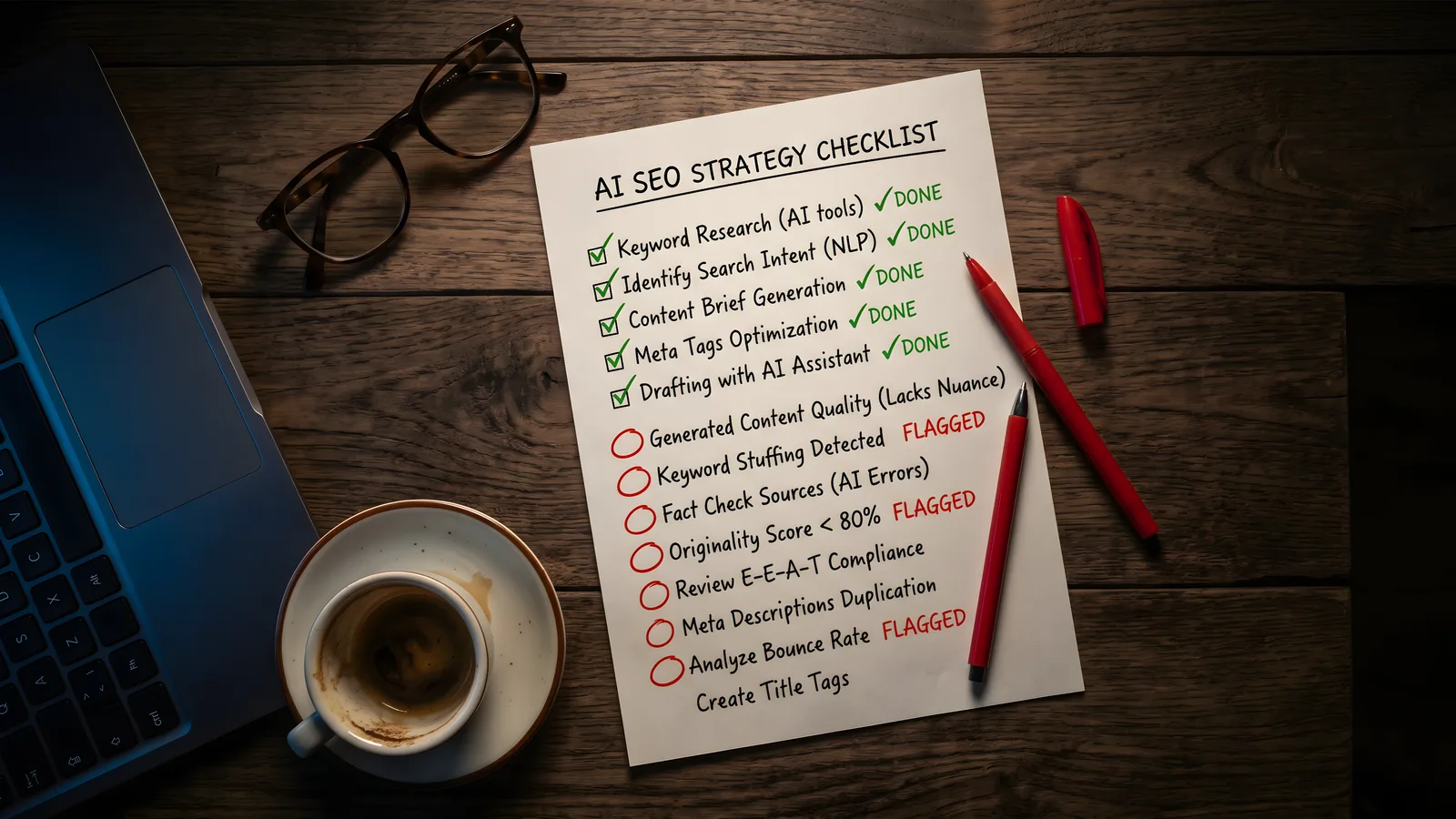
SEO Audit Checklist: 15 Checks You Can Do Today
A practical SEO audit checklist covering the 15 checks that catch the most common ranking problems, from titles and indexability to Core Web Vitals and AI crawler access.

dGENIX for agencies: serving multiple clients with one assistant
As an agency you do not scale by working harder but by doing less duplicate work. Here is how to serve multiple clients without contexts bleeding into each other.

How to Get More Google Reviews, Automatically and GDPR-Safe
Google reviews drive local rankings, trust and conversions. Here is how to collect more of them on autopilot, at the right moment, one click for the customer, and fully GDPR-safe.

AI Content Repurposing: Turn One Video Into Ten Clips
Repurposing turns one piece of content into many. With AI you can turn a long video into short, viral-ready clips with captions and hashtags, in minutes instead of hours.

What Is MCP (Model Context Protocol)?
MCP is an open standard that lets AI assistants talk to your tools through one common interface, the USB-C of AI. Here is what it is, why it matters, and how dGENIX uses it.

Getting found in ChatGPT as a small business: the channel nobody has claimed yet
More and more clients ask an AI assistant instead of Google. It returns two names, not ten links. Here is how to make sure yours is one of them.

What Is dGENIX? The Complete Guide to the Agentic AI Platform
dGENIX gives you GENI, an AI assistant with real memory that takes over your work: 60+ stackable skills, 5 Growth Engines, and connectors to your own tools. Here is the full platform, explained.

Workspace and memory: the brain that lets GENI learn your business
The AI Workspace and Memory AI together form the connective tissue of dGENIX. Here is how GENI remembers everything and builds on earlier work.

How to get found locally in the Netherlands: the complete guide
Customers in your city search online for what you offer. This guide shows how a local business ranks in Google, gets named by AI search engines and collects more reviews.

Optimizing your Google Business Profile: the biggest lever for local visibility
Your Google Business Profile decides whether you appear in the local map card. Here is how to optimize it step by step so you rank for customers in your area.

Finding local keywords: how to target service plus city
Customers search for "service plus city" and for "near me". Here is how to find the local keywords with real demand that your business can actually rank for.

Content marketing for busy founders: from one video to a week of posts
You know you need to stay visible, but you do not have an hour a day for social media. This is the approach that fits a full calendar.

Local visibility in ChatGPT, Gemini and Perplexity
More people ask an AI assistant for a recommendation instead of googling. Here is how to make AI search engines name your local business in their answer.

Local SEO in Eindhoven: get found in Google and AI search (also for expats)
From Brainport tech to the bars on Stratumseind, and a large expat community: here is how an Eindhoven business ranks in Google, gets named by AI search and wins more reviews.

Local SEO in Amsterdam: get found in Google and AI search (also for expats)
Amsterdam is one of the most competitive markets in the Netherlands, with a huge international community. Here is how your business stands out in Google, in AI search and with reviews.

Meet GENI: the AI assistant behind dGENIX
Chat, voice, memory, skills and engines. Meet GENI, the assistant that does your work instead of only giving advice.

Local SEO in Utrecht: get found in Google and AI search (also for expats)
Central, business-minded and full of students and expats: in Utrecht the competition sits close together. Here is how your business ranks in Google, in AI search and with reviews.

The 5 Growth Engines: how GENI drives your online growth
SEO, GEO, Authority, Reputation and AI content. An overview of the 5 Growth Engines GENI uses to grow your business.

Local SEO in Den Bosch: get found in Google and AI search
A Burgundian old town, hospitality and a strong SME scene: here is how a Den Bosch business ranks in Google, gets named by AI search engines and wins more reviews.

The dGENIX dashboard: not a chat box, but a workspace where your assistant actually works
Other AI tools give you a chat box. dGENIX gives you a dashboard where GENI actually works. A tour of everything on it.

AI Agent vs No-Code (n8n, Make, Zapier): Which Should You Choose?
No-code tools like n8n, Make and Zapier follow fixed rules. An AI agent makes decisions and adapts. Here is when to use each, and where an agentic platform wins.

The 5 dGENIX Growth Engines: SEO, GEO, Authority, Reputation and AI Content
The Growth Engines turn GENI into a growth team. Five outcome-driven engines that measure, track, fix, write and publish, run from chat or on a schedule.

Connect Your Own Tools: Connectors and MCP in dGENIX
dGENIX works with the tools you already use. You link your own account, GENI acts on your behalf, and MCP opens the door to a growing ecosystem, all under your control.

Connectors and tools: dGENIX works with the apps you already use
Connect Gmail, Slack, Notion, HubSpot and more in one click. GENI works on your own account, you stay in control.

What Are Agentic Workflows? A Practical Guide for Teams
Most AI tools answer questions. Agentic workflows execute tasks, autonomously, step by step, from start to finish. Here is what that means in practice and why it changes how teams work.

Local visibility for freelancers: clients from your own city without an ad budget
You do not have to win nationally. You only have to be visible to people within twenty kilometres. Here is how to do that as a solo business.

How to Build Your First Agentic Workflow with dGENIX
Building an agentic workflow is simpler than it sounds. Define the goal, stack your skills, write the steps, and let GENI run. Here is a step-by-step walkthrough.

5 Ways an AI Assistant Changes Your Workweek
From inbox zero to weekly content, these are five concrete ways GENI changes your workweek, with realistic time savings.

The Best AI Automation Tools for European SMBs in 2026
European SMBs face specific constraints: GDPR, EU data residency, and the need for tools that execute, not just assist. Here is the honest landscape.

Agentic AI vs Chatbots: The Difference and Why It Matters
A chatbot answers questions. Agentic AI executes workflows. The gap is larger than most people realize, and it decides whether AI actually saves your team time.

Building authority as a solo business: why a small company can beat a big brand
You do not have to be the best known. You have to be the clearest on one subject. Here is how a solo business builds real expertise online with AI as a writing aid.

Skills and workflow automations: from single task to self-driving process
One skill saves time, stacked they do your work. Here is how you build self-running workflows with GENI in dGENIX.

SEO for small businesses: ranking higher in Google without an agency
You do not need to become an SEO expert or hire an agency. This is what a small business can do itself, in the order that pays off most.

Stackable AI Skills Explained: 60+ Modular Capabilities
A skill is a modular unit of AI capability. Stack them and you get workflows that would take months to build with traditional tools. Here is how stackable skills work in dGENIX.

Connecting your existing tools as a small business: replace nothing, link everything
The biggest barrier to new software is the migration. It is not needed: you connect the tools you already use and everything stays where it is.

More reviews for small businesses: without chasing anyone
Your clients are happy, but your profile sits at eight reviews from three years ago. Here is how to collect reviews structurally without spending your time.

The Best AI Tools for Content Creation in 2026
A practical roundup of the AI content tool categories that matter in 2026, writing, image, video and clips, repurposing and scheduling, and how to avoid juggling ten of them.

Which AI skills does a small business actually need? Start with these seven
Sixty skills sounds overwhelming. For a solo business or small team there are seven that make the difference. Here they are, and when to switch each on.

How to Build Topical Authority with AI
Topical authority is how deeply and credibly you cover a subject. It drives both rankings and AI citations. Here is how to build it, from topical map to published content, with AI.

Internal links: the cheapest SEO win you are leaving on the table
A page nothing links to barely exists for a search engine. With internal links you tell Google which page matters and what it is about, without spending a cent.
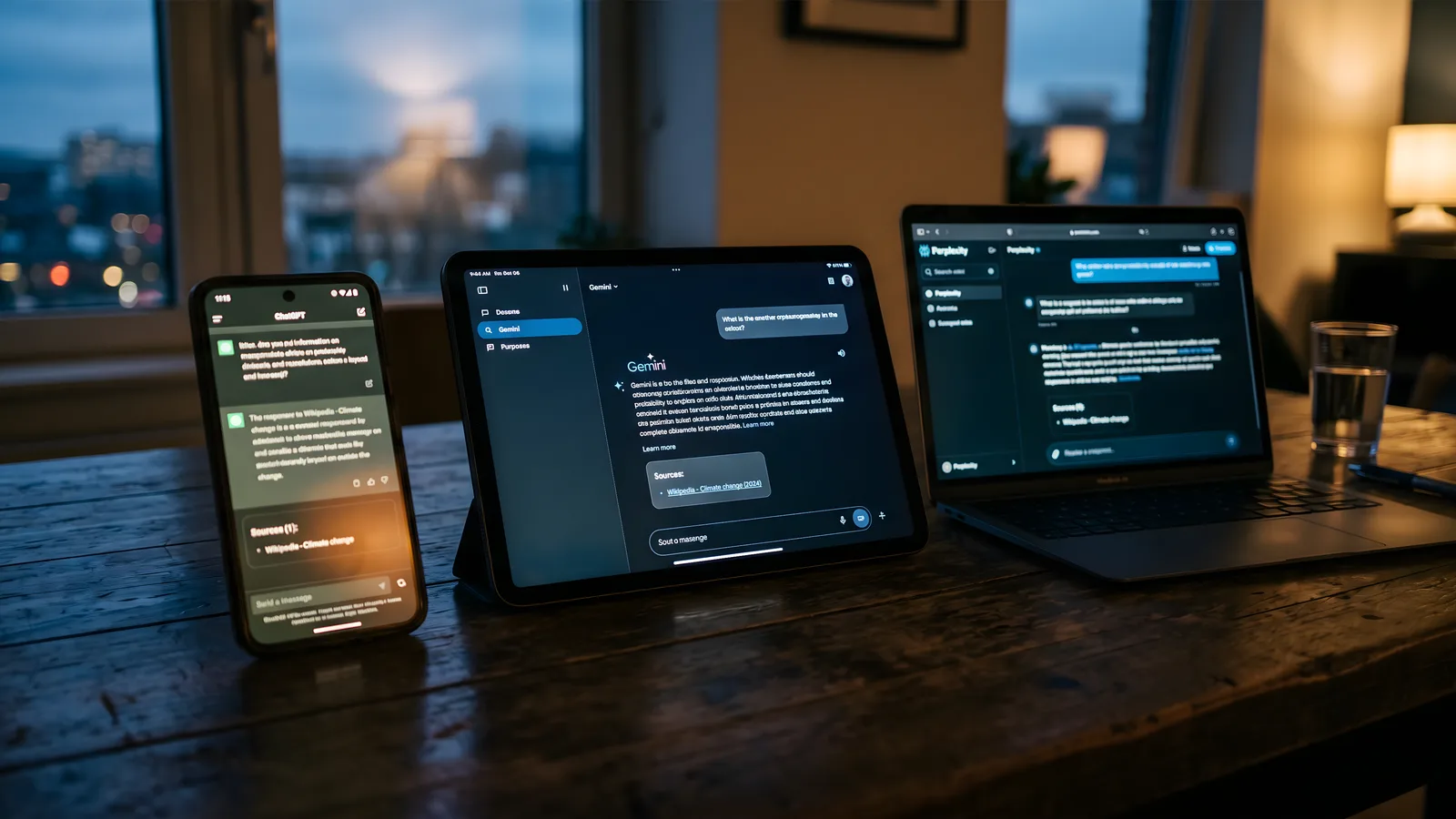
Optimizing for ChatGPT, Gemini and Perplexity: the GEO Playbook
Each AI engine picks and cites sources differently. This is a practical, per-platform playbook to get mentioned in ChatGPT, Google Gemini and Perplexity answers.

Workflows for freelancers: from request to paid invoice in one chain
Automating single tasks is step one. Chaining them into a flow that runs from request to payment is where the real time savings live.
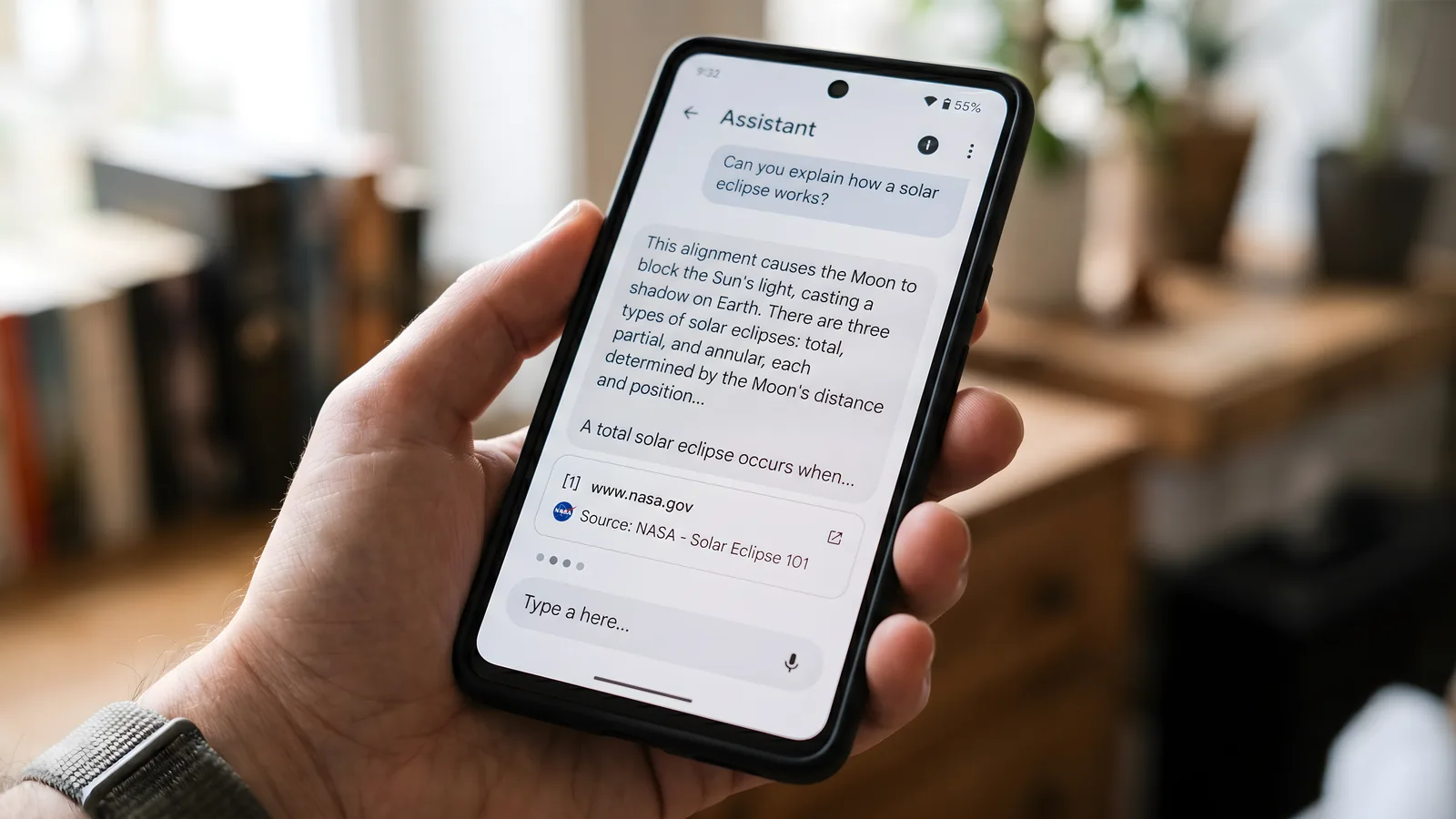
What Is GEO? Generative Engine Optimization Explained
GEO is the practice of getting your brand cited inside AI answers, ChatGPT, Gemini, Perplexity and Google AI Overviews, not just ranked in blue links. Here is what it is and how to start.

Local SEO in Tilburg: get found in Google and AI search
From logistics and industry to a creative, student-driven city: here is how a Tilburg business ranks in Google, gets named by AI search engines and wins more reviews.

Automation for solo businesses: 8 tasks that can run themselves from tomorrow
Automation sounds like something for big companies with an IT department. These are eight concrete tasks a solo business can hand over today.

How Google Maps decides who ranks at the top
Google itself names three factors for local results: relevance, distance and prominence. You cannot change distance, but you can change the other two. Here is how to work on both.

llms.txt explained: a table of contents of your site for AI
An llms.txt file tells AI systems in plain text what is on your site and where to find the most important pages. What it is, what it is not, and how to make one.

E-E-A-T for a small business owner: show that you know what you are talking about
Google judges content on experience, expertise, authoritativeness and trustworthiness. A small business has a head start on the first point that most owners never use.

Your business details the same everywhere: why NAP matters so much locally
Name, address and phone number look like a detail. For Google and AI search engines they are the proof that your business exists and where it is. If they differ everywhere, those systems start to doubt.

An AI assistant for freelancers: what your week looks like with GENI working alongside you
Not a colleague, not a virtual assistant, but someone who knows your tools and forgets nothing. Here is a working week with an agentic AI assistant next to you.

Keyword research for a small business: start with your customer's question
You do not need to chase the words with the most volume. Find the questions your customer asks right before buying, and write one good page for each of them.